How to Build an MVP Without a Backend Developer and Launch Faster?
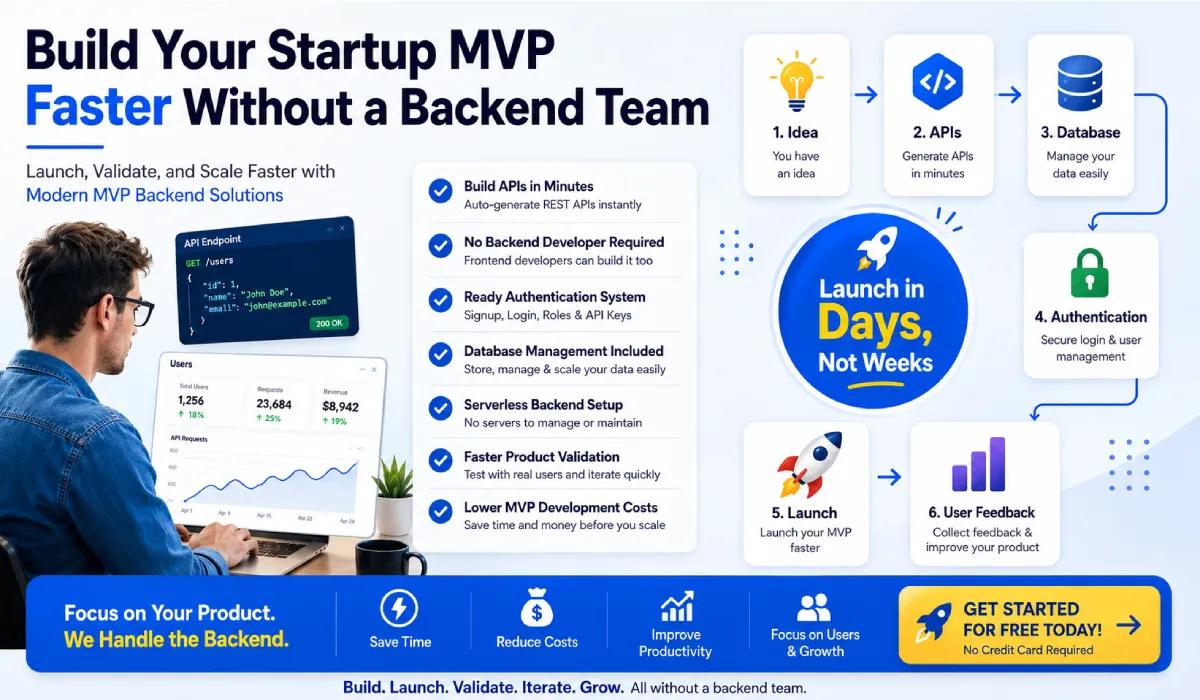
A startup MVP does not need a perfect backend.
It needs real users, real feedback, and a fast path to product validation. Yet many startups lose weeks building servers, databases, authentication, and API endpoints before anyone has even tested the idea. This is why founders are now rethinking the traditional approach to backend development for startup MVPs.
Instead of hiring a backend developer too early, startups can use modern MVP backend solution platforms to build an MVP without backend developer support, create APIs quickly, manage data, set up authentication, and launch faster.
With the right backend platform for startups, frontend developers and founders can quickly set up a backend, integrate it with the product, and start testing with users in days instead of weeks. This makes startup MVP development leaner, faster, and more focused on what matters most: proving whether the product should exist.
Key Insight
To build an MVP without backend developer support and launch faster, startups can use a modern MVP backend solution or backend platform for startups that provides ready API endpoints, database management, authentication, and a serverless backend setup. This helps teams avoid weeks of backend coding, improve developer productivity, reduce MVP development costs, and focus on testing the product with real users sooner.
What Startups Actually Need in Early Development and How Modern Backend Platforms Simplify MVP Development?
In early development, startups do not need a complex backend or months of infrastructure work. They need a working product that can reach users quickly.
In the US, the median annual wage for software developers was $133,080 in May 2024, which shows why hiring backend developers too early can increase MVP costs before validation.
The main goal of startup MVP development is to test the idea, collect feedback, and improve the product before spending too much time or money on backend code.
Modern backend platforms for startup solutions make this easier by giving teams the basic backend pieces they need from the start.
Startups need speed, so modern platforms help them build a backend in minutes instead of weeks.
They need ready API endpoints so frontend developers can connect to the product quickly.
They need simple database management without setting up servers, ORMs, or migrations manually.
They need a secure authentication system for signup, login, user access, and API keys.
They need a backend without managing servers so the team can focus on users, not infrastructure.
They need flexibility to change the data model when user feedback changes the product direction.
They need a practical MVP backend solution that supports launch, testing, and iteration.
They need better developer productivity, especially when the team has frontend developers but no backend team.
They need affordable MVP development tools that help them validate before hiring a full backend team.
They need a faster path from idea to product launch, so they can learn from real users early.
This is where modern Backend as a Service tools and API builders become useful. Instead of spending weeks building servers, databases, authentication, and endpoints from scratch, startups can use a serverless backend approach to launch faster, reduce technical delays, and keep the MVP focused on validation.
Best Backend Solutions for Startup MVPs
The best backend solutions for startup MVPs are the ones that help teams launch faster, test with real users, and avoid spending weeks on backend infrastructure before validation. For early startup MVP development, the goal is not to build the most complex backend. The goal is to get a working product in front of users quickly.
EazeMyAPI
EazeMyAPI is a fast MVP backend solution that helps startups generate APIs, a database, authentication, and docs quickly without writing backend code.
Why use it:
Use it when you want to build a backend in minutes, avoid server management, and launch your MVP faster.
When to use:
Use EazeMyAPI when founders, frontend developers, or early-stage teams need a backend for a startup MVP without hiring a backend developer.
When to avoid:
Avoid it if the product already needs a deeply custom backend architecture, complex business logic, or enterprise-level backend control from day one.
Firebase
Firebase is a Google-backed backend platform for building web and mobile apps with authentication, database, hosting, analytics, and cloud functions.
Why use it:
Use it for quick app development, real-time features, and ready-made backend services.
When to use:
Use Firebase when building mobile-first MVPs, real-time apps, chat apps, or products already using the Google ecosystem.
When to avoid:
Avoid it if the MVP needs a strong relational database structure or more SQL-based control.
Supabase
Supabase is an open-source backend platform built around Postgres, with authentication, instant APIs, storage, and real-time features.
Why use it:
Use it when the MVP needs relational data, SQL flexibility, and developer-friendly backend control.
When to use:
Use Supabase for SaaS MVPs, dashboards, marketplaces, internal tools, and products with structured data.
When to avoid:
Avoid it if the team wants a very simple backend setup without handling database logic or configuration.
Startups Can Launch Faster Without a Backend Team
Startups do not need to wait for a full backend team to validate an MVP. In the early stage, speed matters more than perfect infrastructure. A simple MVP backend solution can help teams create APIs, manage data, set up authentication, and move toward product launch without spending weeks on backend setup.
The faster startups reach users, the faster they learn what works, what needs to change, and what is worth building next. That is why choosing the right backend platform for startups can make a real difference.
If the goal is to build an MVP without backend developer support and launch faster, tools like EazeMyAPI can help turn backend setup into a quicker, simpler step, so startups can focus on users, feedback, and growth.
Get started for free today.
FAQs
Should startups hire backend developers for MVPs?
Not always. For early startup MVP development, startups can use an MVP backend solution to launch faster before hiring a backend developer.
How can startups build an MVP without a backend team?
Startups can build an MVP without backend developer support by using a backend platform for startups that provides APIs, a database, authentication, and docs.
What is the fastest way to build a backend for an MVP?
The fastest way is to use a tool that helps you build a backend in minutes with ready API endpoints, database, and authentication.
Which backend platform is best for startup MVPs?
The best backend platform for startups depends on the MVP. EazeMyAPI is useful for fast backend setup, Firebase for app-based MVPs, and Supabase for SQL-based products.
Can frontend developers build MVP backends themselves?
Yes. With a backend for frontend developers, frontend teams can create APIs, manage data, and connect the product without building backend code from scratch.
What are the benefits of Backend as a Service platforms?
Backend as a Service (BaaS) platforms reduce setup time, improve developer productivity, provide authentication, database management, and help startups launch faster.
How do startups reduce development costs for MVPs?
Startups can reduce costs by using MVP development tools, avoiding early backend hiring, choosing a serverless backend, and validating the product before scaling.
Ready to build your backend?
Create your first project for free. No credit card required.
Get started free