Backend as a Service Explained: Features, Benefits & BaaS vs Traditional Backend
Backend as a Service (BaaS)
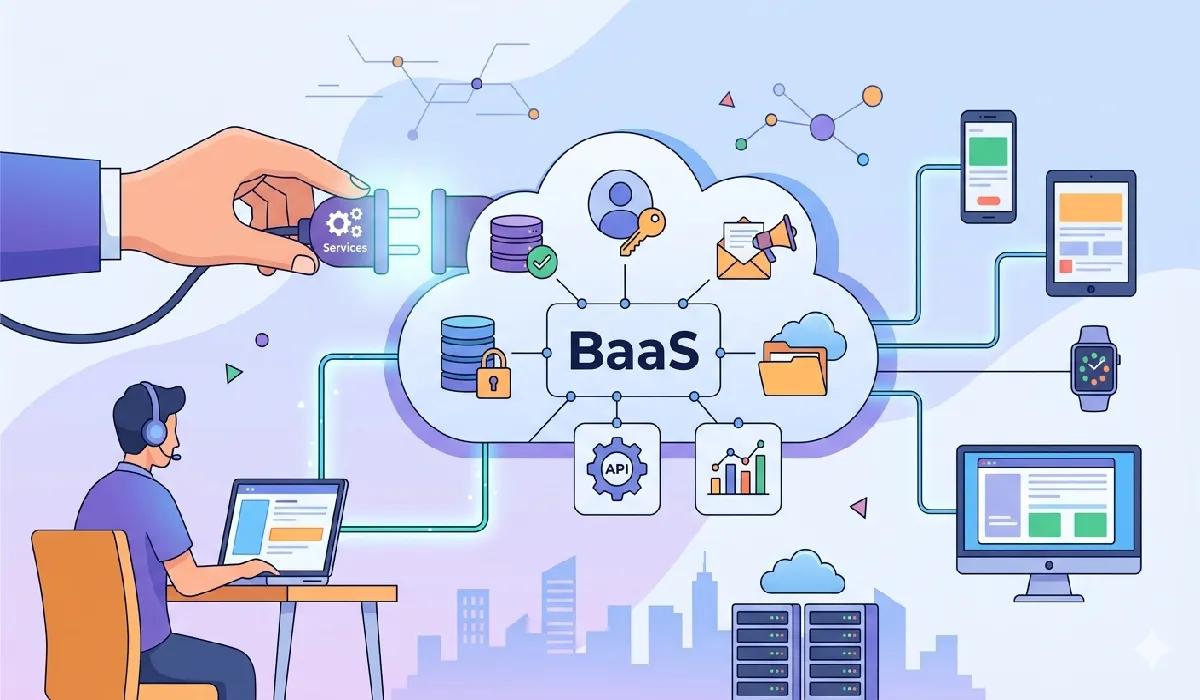
Backend as a Service (BaaS) is a cloud-based solution that provides ready-to-use backend components like database, authentication, APIs, hosting, and scalability, so you don't have to build or manage them yourself. Compared to a traditional backend, BaaS reduces development time and complexity. It's best suited for developers and teams who want to launch quickly without handling backend systems from scratch.
If you've ever tried shipping an app quickly, you already know where things slow down.
Not the idea. Not the UI. It's the backend.
Setting up a database. Writing APIs. Handling authentication. Making sure everything scales without breaking. What should take days quietly turns into weeks of work that users never even see.
That's exactly the gap Backend as a Service (BaaS) is solving. Instead of building the backend piece by piece, you start with something that already exists, a ready backend you can plug into. No servers to manage. No long setup. Just a working foundation.
Platforms like Firebase made this idea popular. But the space has evolved a lot since then. Today, developers aren't just looking for convenience — they're looking for speed, flexibility, and ways to build without getting stuck in backend complexity.
And that's exactly what this guide is about.
We'll break down:
- What does backend as a service actually mean?
- How does it work in real projects?
- How does it compare to traditional backend setups?
- And what to look for if you're choosing a BaaS platform?
What is Backend as a Service (BaaS)?
Backend as a Service (BaaS) is a cloud-based solution that gives you a ready-made backend for your application, so you don't have to build one from scratch.
Instead of setting up servers, designing databases, writing APIs, and managing infrastructure, you use a platform that already provides all of this for you.
In simple terms, BaaS lets you build apps without handling backend complexity.
How BaaS Works?
At a basic level, BaaS removes the need to build your backend from scratch. You start by defining your app, what data it needs, and how users interact with it.
The BaaS platform then sets up the backend for you:
- creates the database
- handles authentication
- generates APIs
From there, your frontend simply connects to these APIs to send and fetch data.
Behind the scenes, when you use a backend as a service platform, you're essentially plugging your frontend (React, Flutter, mobile apps, etc.) into a pre-built backend that already includes:
- A database to store your data
- Authentication for users (login, signup, access control)
- Ready-to-use APIs
- Hosting and cloud infrastructure
- Real-time data handling (for chats, updates, etc.)
- Built-in scalability
So instead of building these systems, you just use them.
Features of BaaS Platforms
Database (Managed & Scalable)
A BaaS platform gives you a cloud-based database that's already set up and ready to use. You don't have to worry about servers, storage, or scaling as your app grows; the database grows with it. It handles data storage, structure, and performance behind the scenes.
Authentication (Built-In User Management)
User login systems can take significant time to build and secure. With BaaS, authentication is built in from the start. You get features like login, signup, password management, and even social logins without writing complex logic.
Auto-Generated APIs
One of the biggest advantages of BaaS is that it automatically creates APIs for your data. Instead of manually building endpoints, you get ready-to-use APIs that let your frontend interact with the backend instantly.
Hosting & Cloud Infrastructure
BaaS platforms run entirely on the cloud, which means you don't need to set up or manage servers. Deployment, uptime, and infrastructure are all handled for you. Whether you're launching an MVP or scaling a production app, the platform ensures your backend is always available and performing.
Real-Time Data
Many modern apps rely on instant updates like chats, notifications, or live dashboards. BaaS platforms often include real-time data capabilities, allowing your app to sync data across users instantly without complex architecture.
Scalability (Automatic Growth Handling)
As your app gains users, your backend needs to handle increased traffic. BaaS platforms automatically scale resources based on demand, so you don't have to manually upgrade servers or optimize performance under pressure. This ensures your app remains stable even during sudden spikes.
API-First Integration
Everything in a BaaS platform works through APIs, making it easy to connect with any frontend framework or mobile app. Whether you're using React, Flutter, or anything else, you can integrate quickly using simple API calls.
Traditional Backend vs BaaS
Traditional backend development means building everything yourself: database, APIs, authentication, and infrastructure. It gives you full control, but it also takes time and ongoing effort.
Backend as a Service (BaaS) simplifies this by providing a managed backend platform where these components are already set up. You skip the setup and start building directly.
If you've ever looked into how teams try to create REST APIs without backend, BaaS is essentially a complete version of that approach.
Key Differences: BaaS vs Traditional Backend
| Aspect | Backend as a Service (BaaS) | Traditional Backend |
|---|---|---|
| Setup Time | Minutes to hours | Days to weeks |
| Infrastructure | Managed cloud backend | Self-managed servers |
| API Creation | Auto-generated APIs | Manually built APIs |
| Database Setup | Pre-configured or auto-created | Designed from scratch |
| Authentication | Built-in | Custom implementation |
| Scalability | Automatic | Manual |
| Maintenance | Minimal | High |
| Flexibility | Moderate | Full control |
| Speed to Launch | Fast (ideal for MVPs) | Slower |
In short, BaaS trades some control for speed, which is why it's becoming the go-to for developers who want to ship faster without getting stuck in backend complexity.
Benefits of Backend as a Service
At its core, Backend as a Service (BaaS) is about removing friction. Instead of spending time on backend setup and infrastructure, you start with a cloud backend that's already ready to use, so your focus stays on building the product.
Here's where BaaS makes a real difference:
-
Faster development and launch
You skip backend setup and start building immediately. This is especially useful for MVPs, prototypes, and fast-moving teams.
-
No server or infrastructure management
With a managed backend platform, you don't deal with servers, deployment, or maintenance; everything runs in the cloud.
-
Auto-generated APIs
BaaS platforms provide ready-to-use APIs, so you don't have to write backend logic from scratch. If you've explored ways to create REST APIs without a backend, this is where BaaS becomes incredibly practical.
-
Built-in authentication and security
Login systems, user management, and access control are already handled, reducing both development time and security risks.
-
Scalability without effort
As your app grows, the backend scales automatically, no need to manually upgrade infrastructure or optimize for traffic spikes.
-
Real-time data capabilities
Many BaaS platforms support live data updates, making it easier to build features like chat apps, dashboards, or notifications.
-
Works across all platforms
Whether you're building with React, Flutter, or mobile apps, BaaS integrates easily through APIs.
-
Reduced backend complexity
You don't need deep backend expertise to build functional apps, which is why it's popular among frontend developers and indie builders.
BaaS vs API Builder
At first glance, Backend as a Service (BaaS) and an API builder can feel similar; both reduce backend work and help you move faster.
But they solve slightly different problems.
BaaS gives you a complete backend environment, database, authentication, hosting, real-time data, and APIs all bundled together in a managed platform.
An API builder, on the other hand, focuses specifically on creating and exposing APIs. It's more about generating backend endpoints quickly rather than managing the entire backend stack.
Key Differences: BaaS vs API Builder
| Aspect | Backend as a Service (BaaS) | API Builder |
|---|---|---|
| Scope | Full backend (database, auth, APIs, hosting) | API creation only |
| Backend Coverage | Complete backend system | Focused on endpoints |
| Database Handling | Built-in and managed | May require setup or integration |
| Authentication | Included | Often separate or manual |
| Infrastructure | Fully managed | Depends on the tool |
| Use Case | Build the entire app backend | Quickly expose APIs |
| Flexibility | Platform-based | More flexible for custom logic |
| Speed | Fast setup | Fast API creation |
So which one should you choose?
- Choose BaaS if you want a complete, structured backend system out of the box
- Choose an API builder if your goal is speed, simplicity, and instant API generation
Who Should Use BaaS?
Backend as a Service (BaaS) isn't just for one type of developer; it's for anyone who wants to build and ship faster without getting stuck in backend complexity.
Here's where it fits best:
Startups
For startups, speed matters more than perfection in the early stages. BaaS helps you launch faster without spending weeks building infrastructure. You can validate ideas, ship MVPs, and iterate quickly using a managed backend platform instead of investing heavily in backend development from day one. It also reduces initial costs and lets your team focus on product-market fit.
Freelancers
As a freelancer, your time is directly tied to your output. BaaS helps you deliver projects faster by removing repetitive backend work like setting up databases or writing APIs. Whether you're building web or mobile apps, you can rely on ready backend services for apps and focus more on design, functionality, and client requirements, not backend setup.
Developers (Especially Frontend-Focused)
If you're a frontend developer, BaaS makes it possible to build full-stack applications without deep backend expertise. Instead of learning and managing servers, you can work with APIs and a cloud backend that's already in place. This is especially useful if you're exploring ways to create REST APIs without a backend or looking for a backend without a server approach.
Final Thoughts
Backend as a Service (BaaS) changed how we build apps, making backend faster, simpler, and less dependent on infrastructure. Instead of starting from scratch, developers can now rely on a managed backend platform and focus more on the product itself.
But the shift is going further.
At EazeMyAPI, we're building for a world where backend isn't something you set up at all. You simply describe what you want to build, and your database, APIs, and core backend are generated instantly, ready to use.
Frequently Asked Questions (FAQs)
-
Is Backend as a Service suitable for production apps or just MVPs?
Yes, most backend as a service platforms are built to handle production workloads with scalability, security, and performance in place.
-
Do I need backend knowledge to use BaaS?
Not necessarily. Many tools are designed for frontend developers and enable building apps with a backend without a server approach.
-
How does BaaS handle API customization?
Most platforms allow custom logic or extensions, but flexibility varies. If deep control is needed, combining BaaS with tools that create REST APIs without a backend can help.
-
Is BaaS a good option for mobile app development?
Yes, BaaS is widely used for backend services for apps, especially mobile apps that need authentication, real-time data, and fast deployment.
-
How do I choose the best backend as a service platform?
Look for scalability, ease of use, API flexibility, pricing, and whether it fits your workflow, especially if you're comparing options like a Firebase alternative for frontend developers.
-
Can BaaS replace a full backend team?
For many use cases, yes, especially for startups and small teams. But complex systems may still require custom backend development.
Ready to build your backend?
Create your first project for free. No credit card required.
Get started free